ZOË PAUL
An Interview by Sofia Zymnis
December 2025
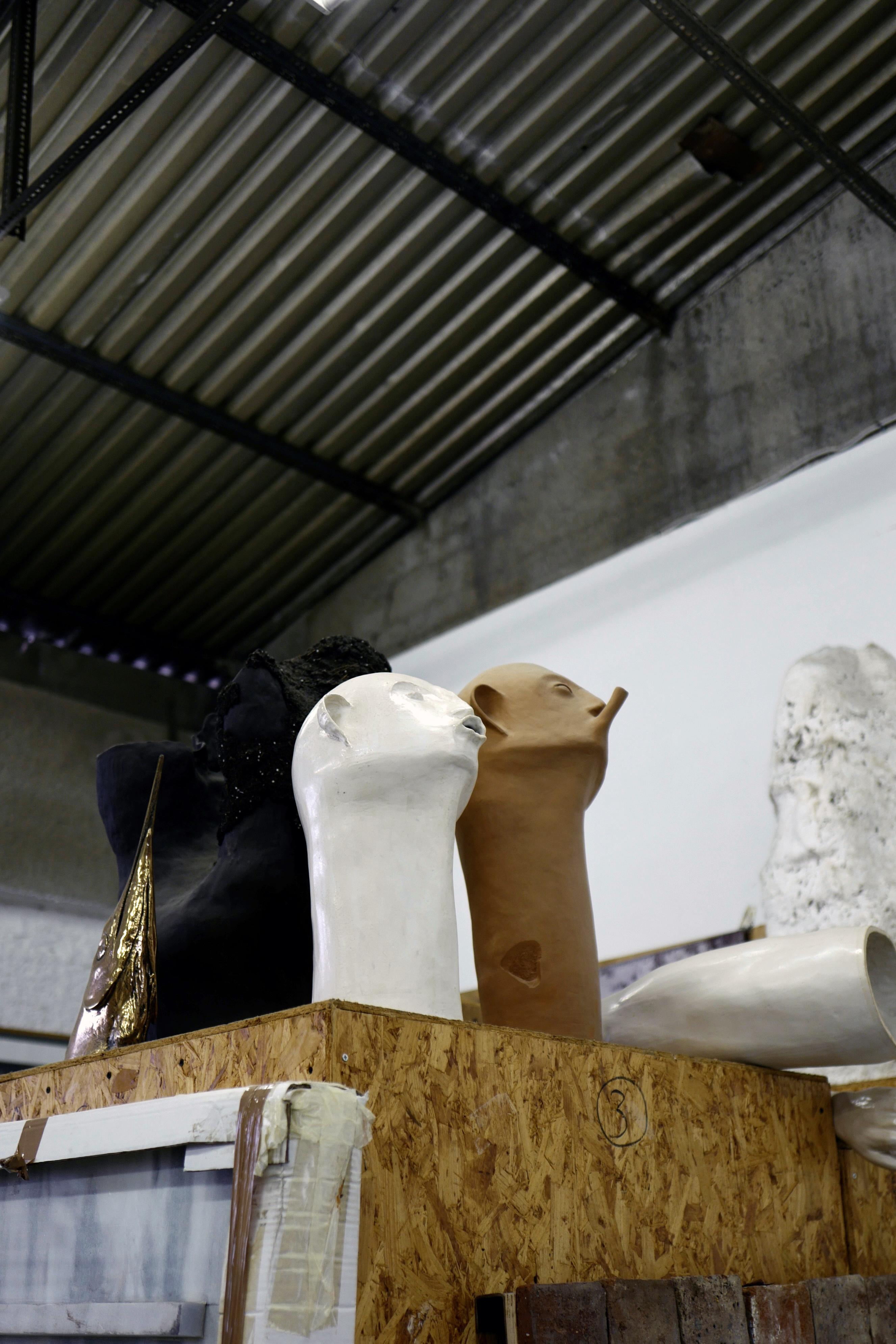
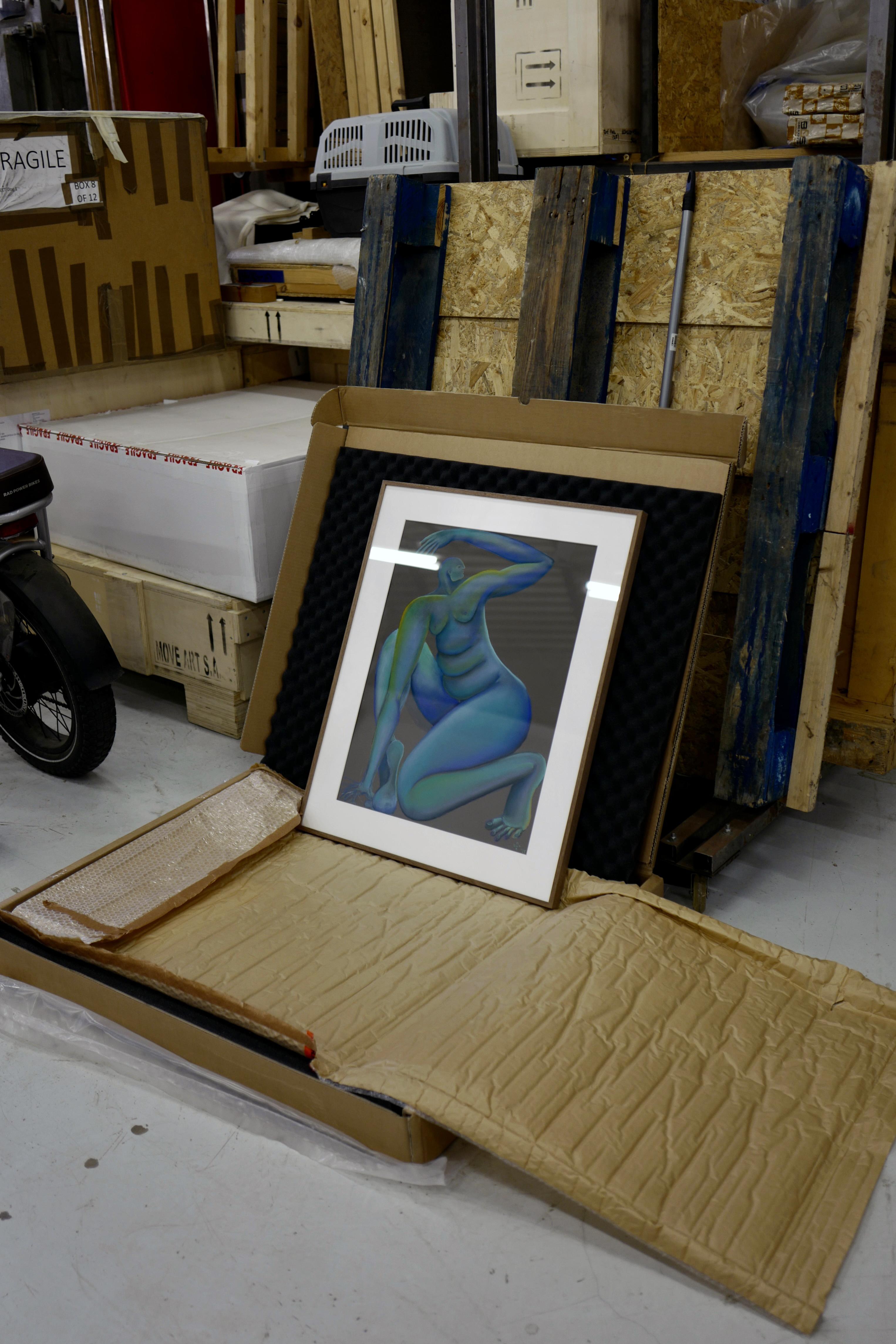
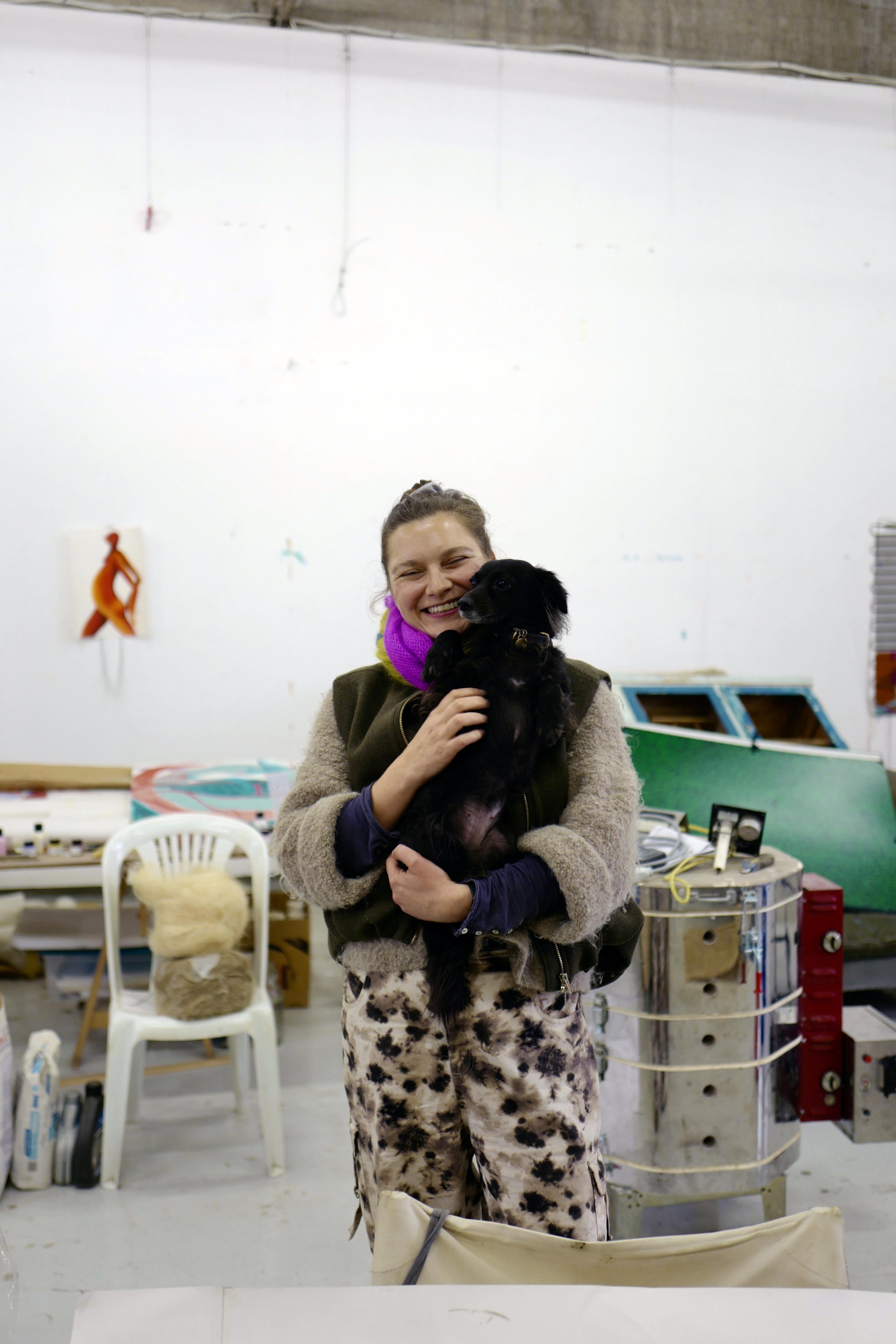
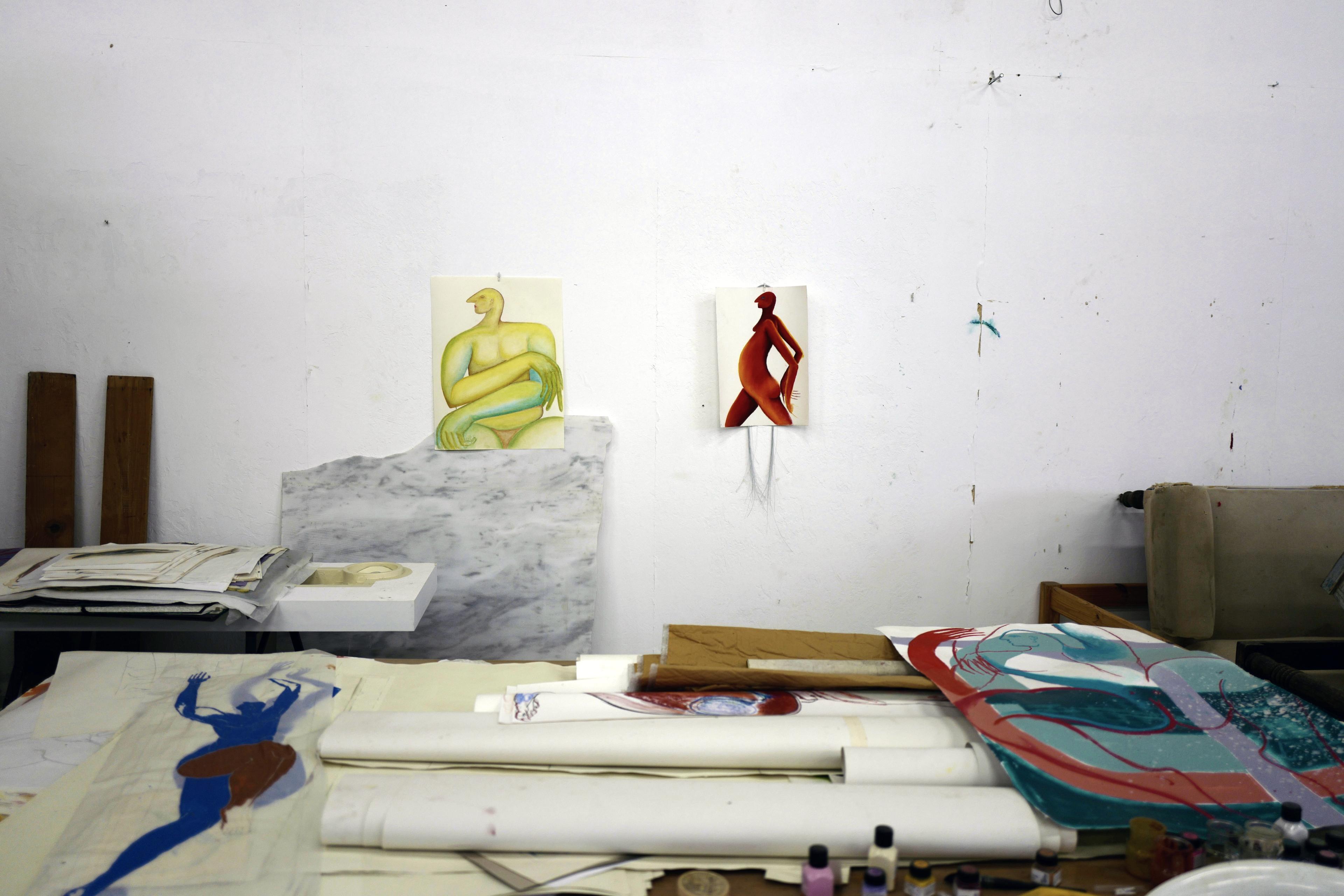
I met Zoë in her Athens studio, just outside the city centre, in the final days of December 2025. I was greeted at the door by Winnie, her little black dog, whose wispy—one could say witchy—tufts of hair fluffed out of her ears as she carefully observed us, barking at the occasional bypassing cat. Before we met, I had texted Zoë some questions and asked her to reply simply with a photograph. This generated different and oftentimes surprising answers, inviting an alternative type of communication and opening a creative dialogue. This very style of nonverbal communication unwittingly became a theme in our subsequent conversation. Over coffee, melomakarona, and the steady, melodic hum from the printing studio next door, I sat with Zoë as she told me about her practice. From algorithmic weaving to mycelia, the binding thread through our conversation and within Zoë’s varied work is interconnectedness; a kind of nonverbal language that moves across material and temporal boundaries, connecting histories and hinting at a shared human consciousness.
Where do you go to find inspiration?
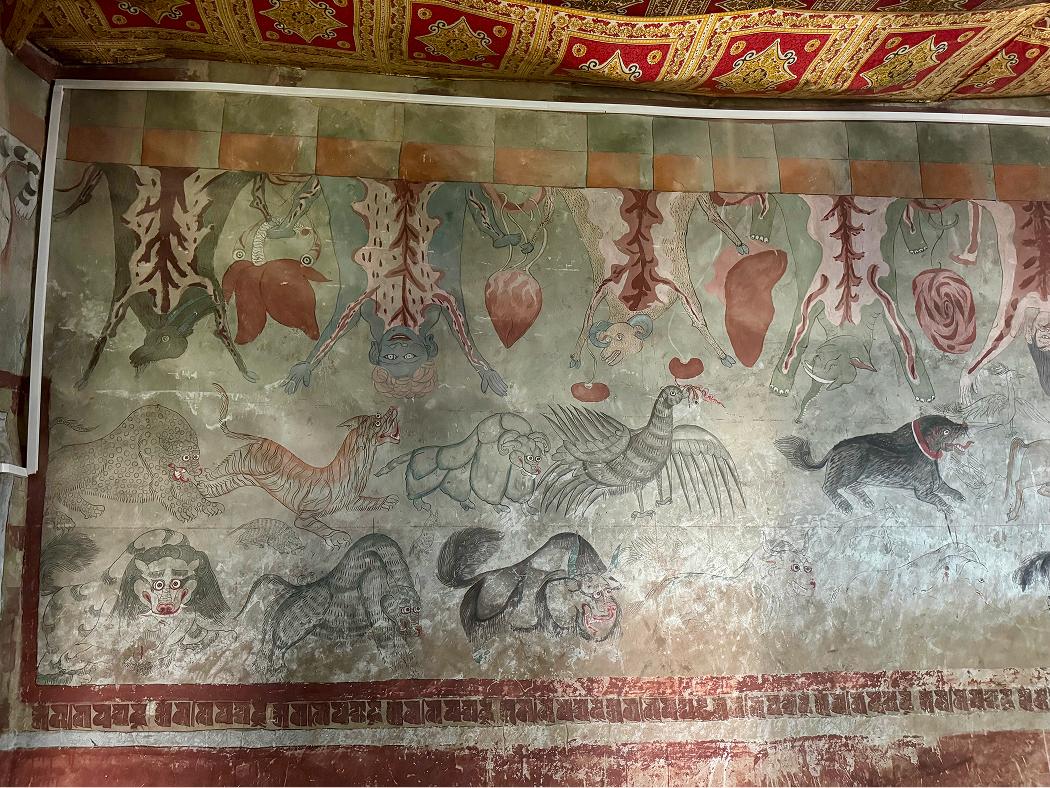
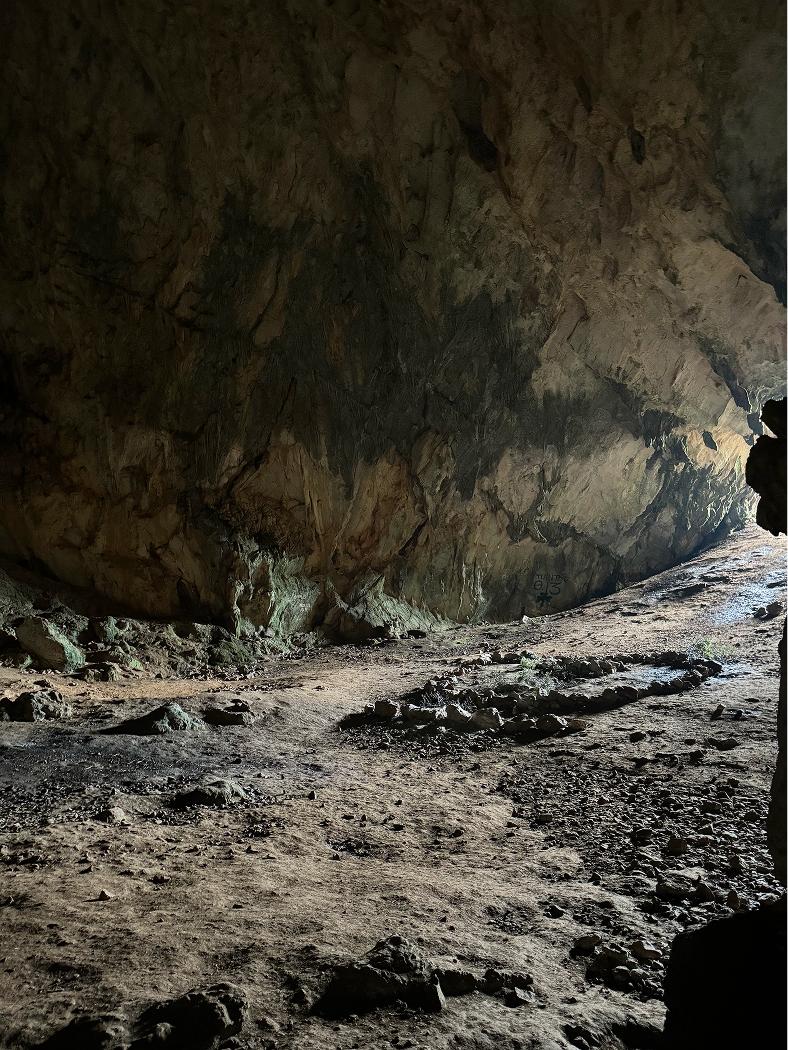
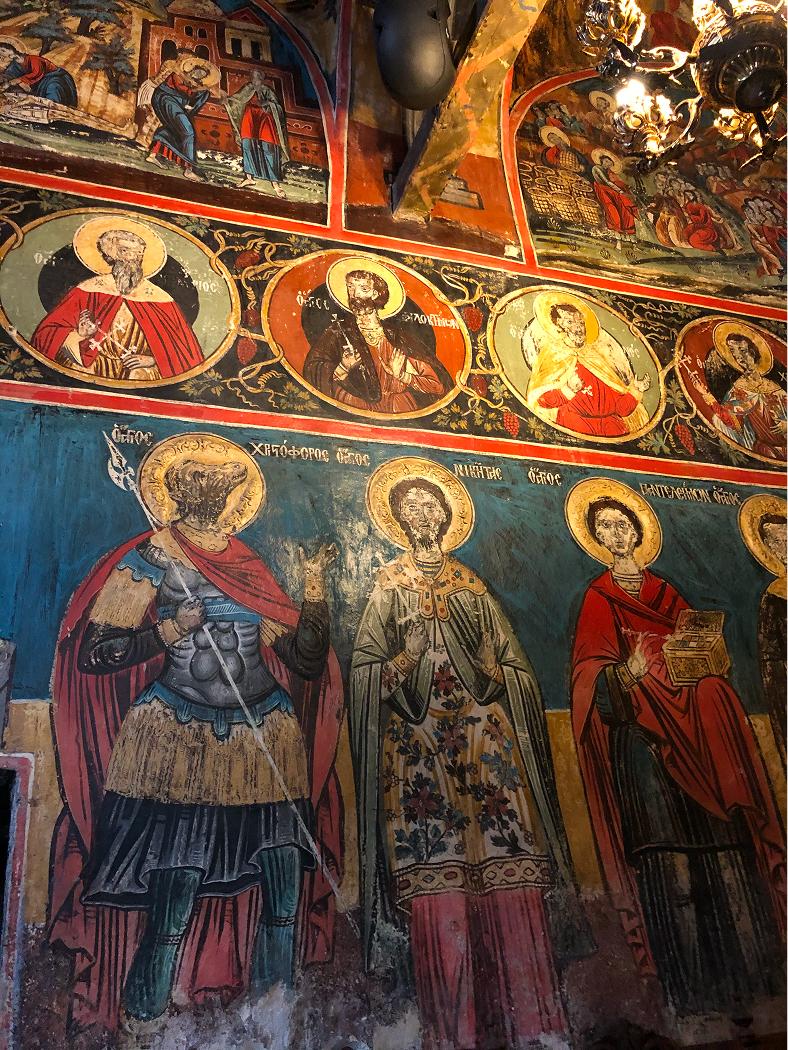
Is there an object, process, or meditative practice that is essential to your practice?
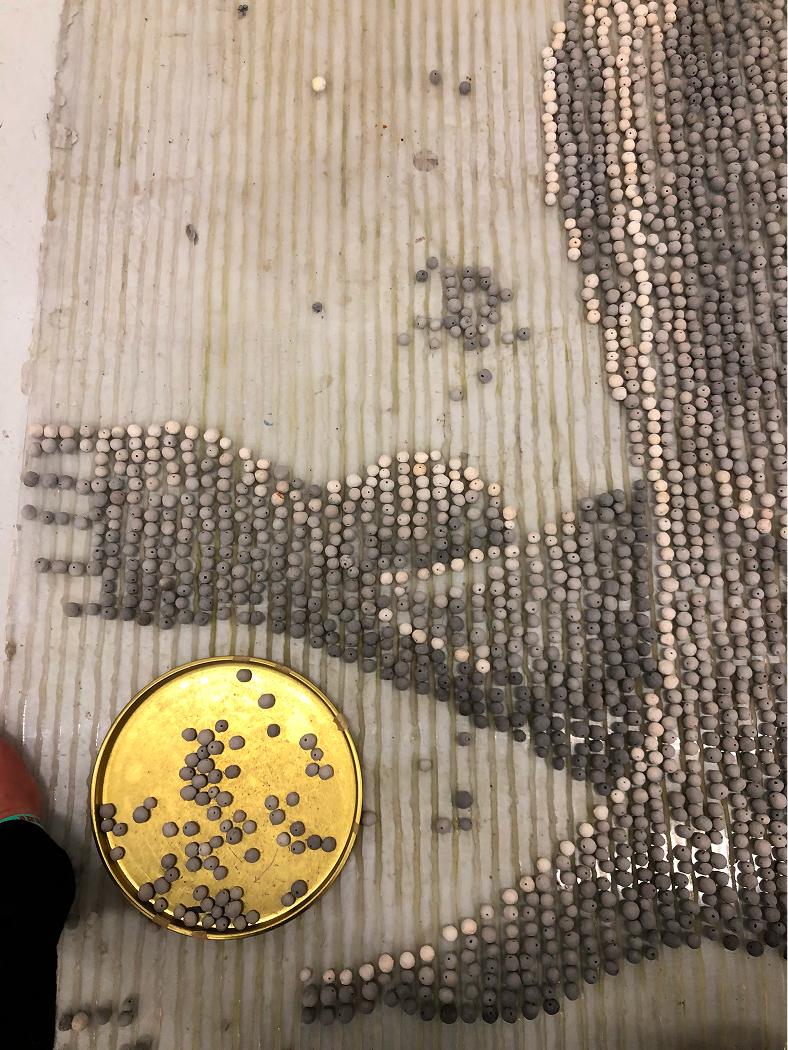
What do you always carry in your pocket?
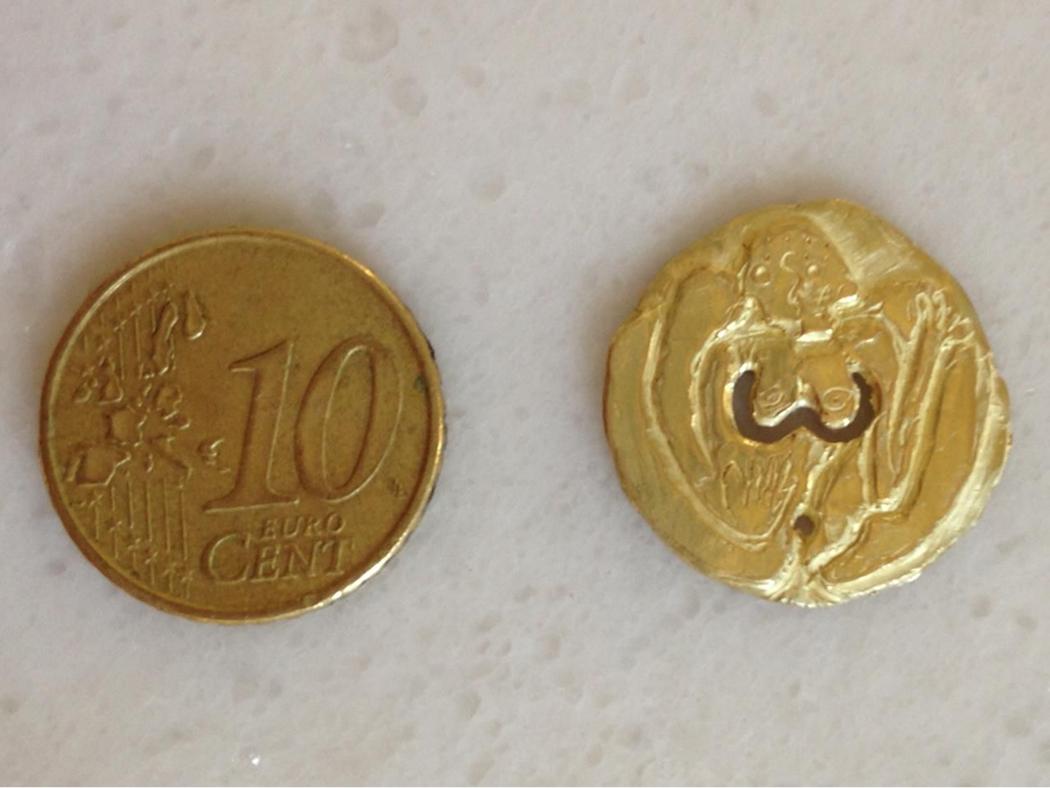
Do you have a current obsession or fixation that is steering your work?
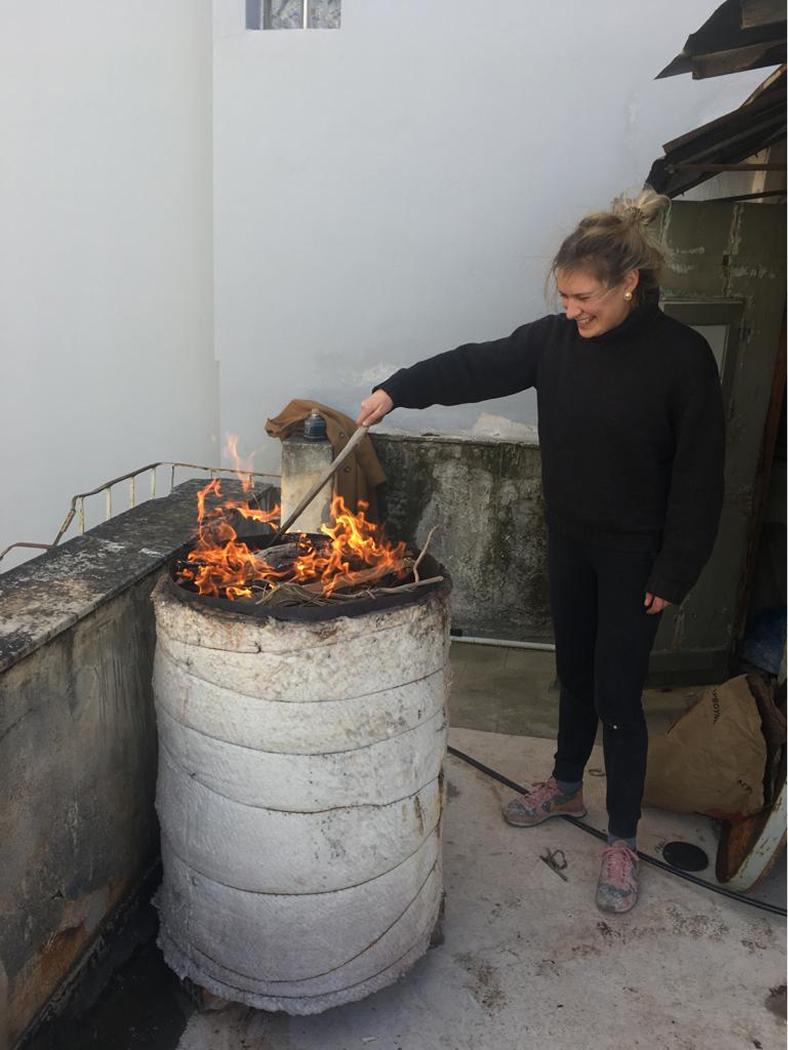
Is there a part of your practice that you’ve tried to move away from but now embrace?
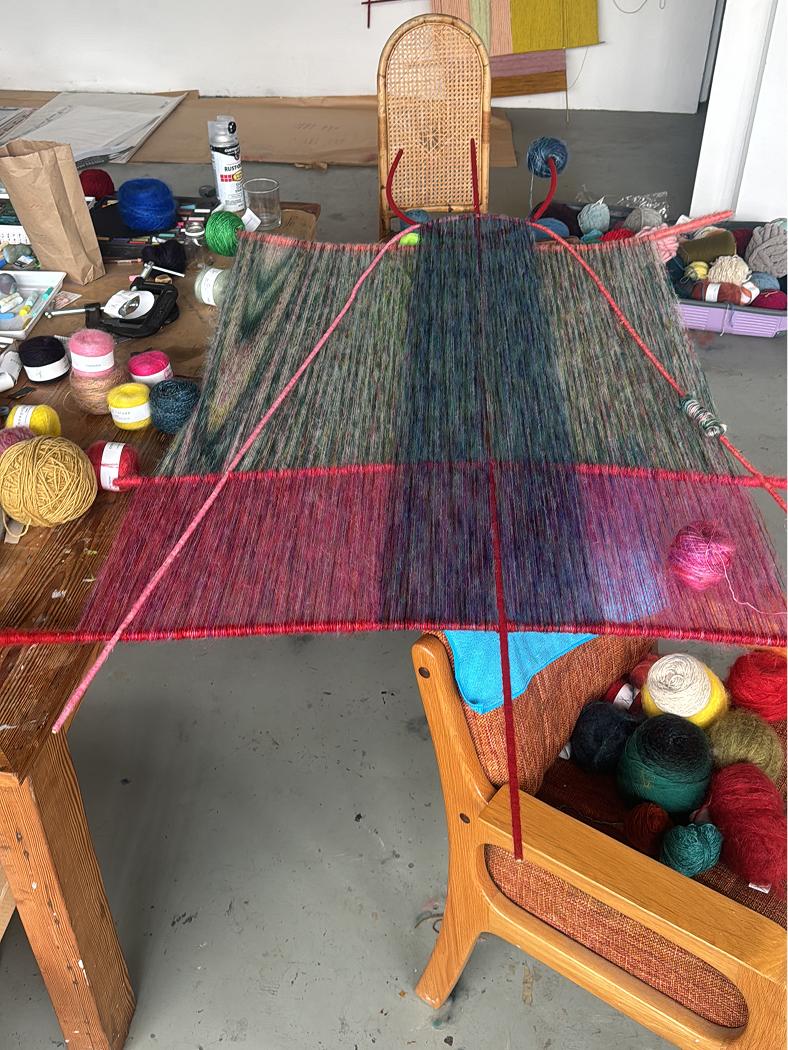
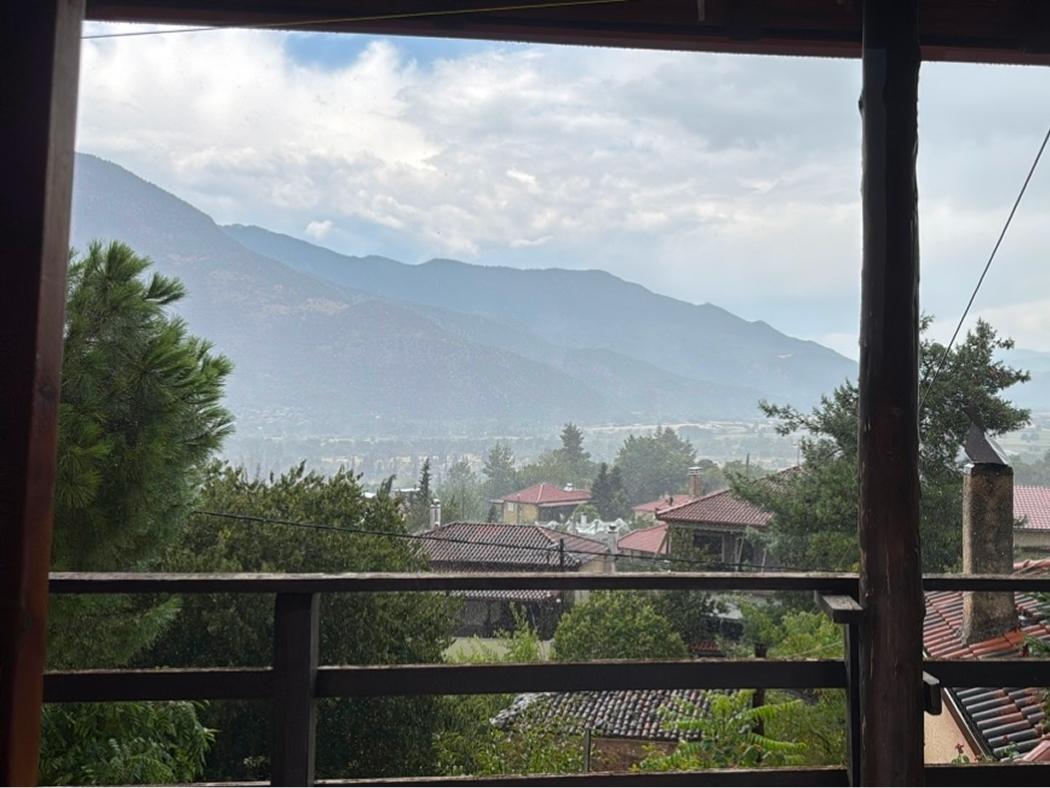
Right now, what feels most like “home” to you?
Sofia: You were in London a couple of months ago for Frieze, how was that? Funny, we might have crossed eachother there, but we didn’t know each other yet.
Zoë: Yes, it was nice to be in London, I really like the city. I don’t think I could live there, but I love visiting.
Sofia: You studied there, right?
Zoë: Yes, I studied in London. But I grew up here, in Greece. I was in Kythira until I was 11.
Sofia: I’ve met very few foreigners who grew up on a Greek island like that. So your parents used to live in South Africa, and then they moved to Kythira?
Zoë: They left South Africa because of the politics. My uncle went first because he was called up for the army, and he had 24 hours to go to his posting or leave the country. The quickest way out was to take a boat. He didn’t know anyone. He met this woman on the boat from Cape Town to Europe, who was from Kythira. The journey was quite long, so he had a lot of time to make friends, and he decided to go to Kythira with her. Then my parents followed; they still have their studios there. They’re both artists.
Sofia: What kind of art do they make?
Zoë: My dad illustrates children’s books – you know Winnie the Witch?
Sofia: Yes, I used to love those books! And Winnie, your dog, is named after the character?
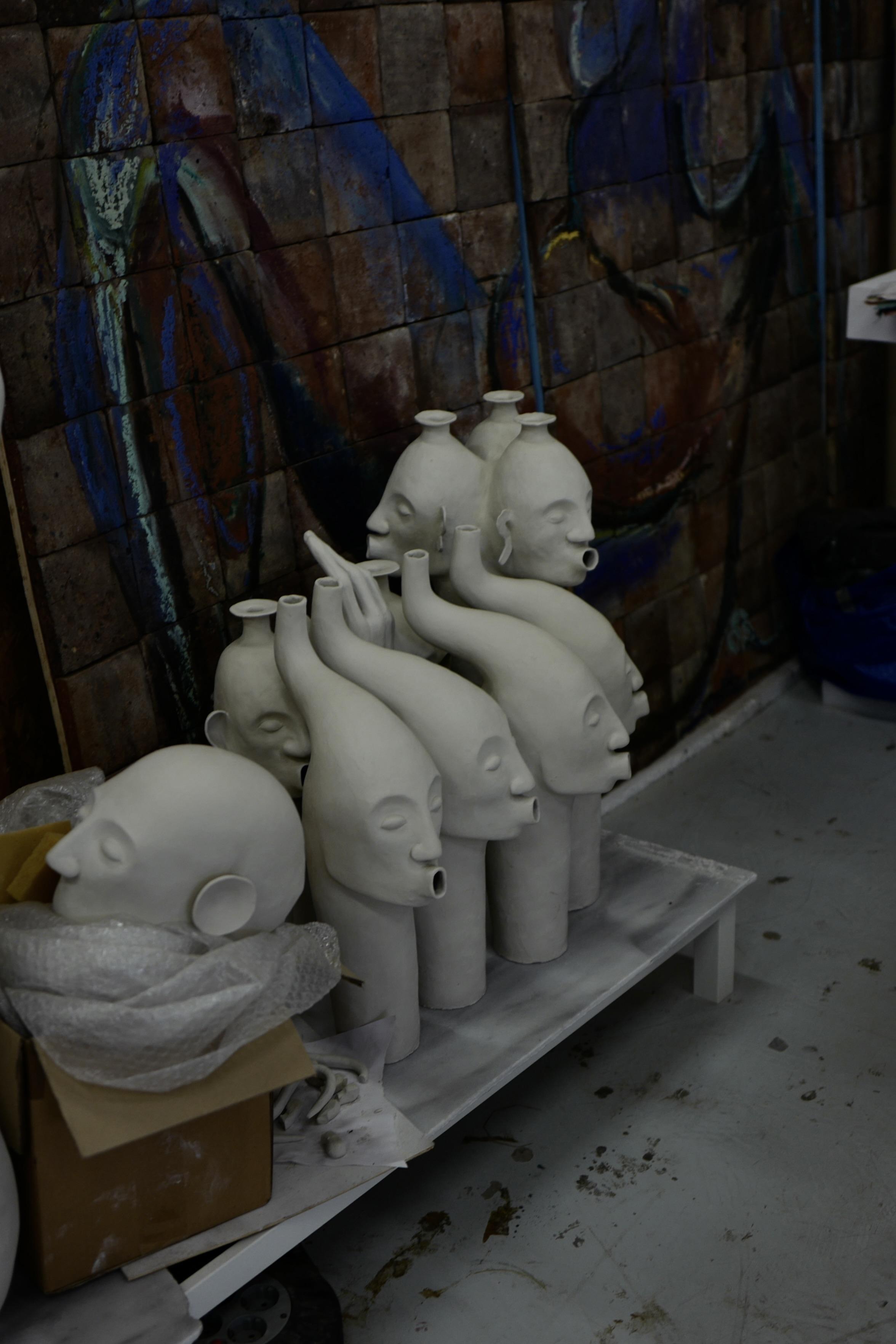
Zoë: Yes, she is! And my mom does sculpture— a bit of everything. She’s multi-talented.
Sofia: So you’ve been making art since you were young.
Zoë: That’s how the beads started. My parents decided to homeschool me. I followed the British system, but my mom is incredibly dyslexic. She only found out recently. She taught me to read while she was learning to read herself! It was an unusual family dynamic, but they found a system, and it worked.
Sofia: How was it growing up on an island?
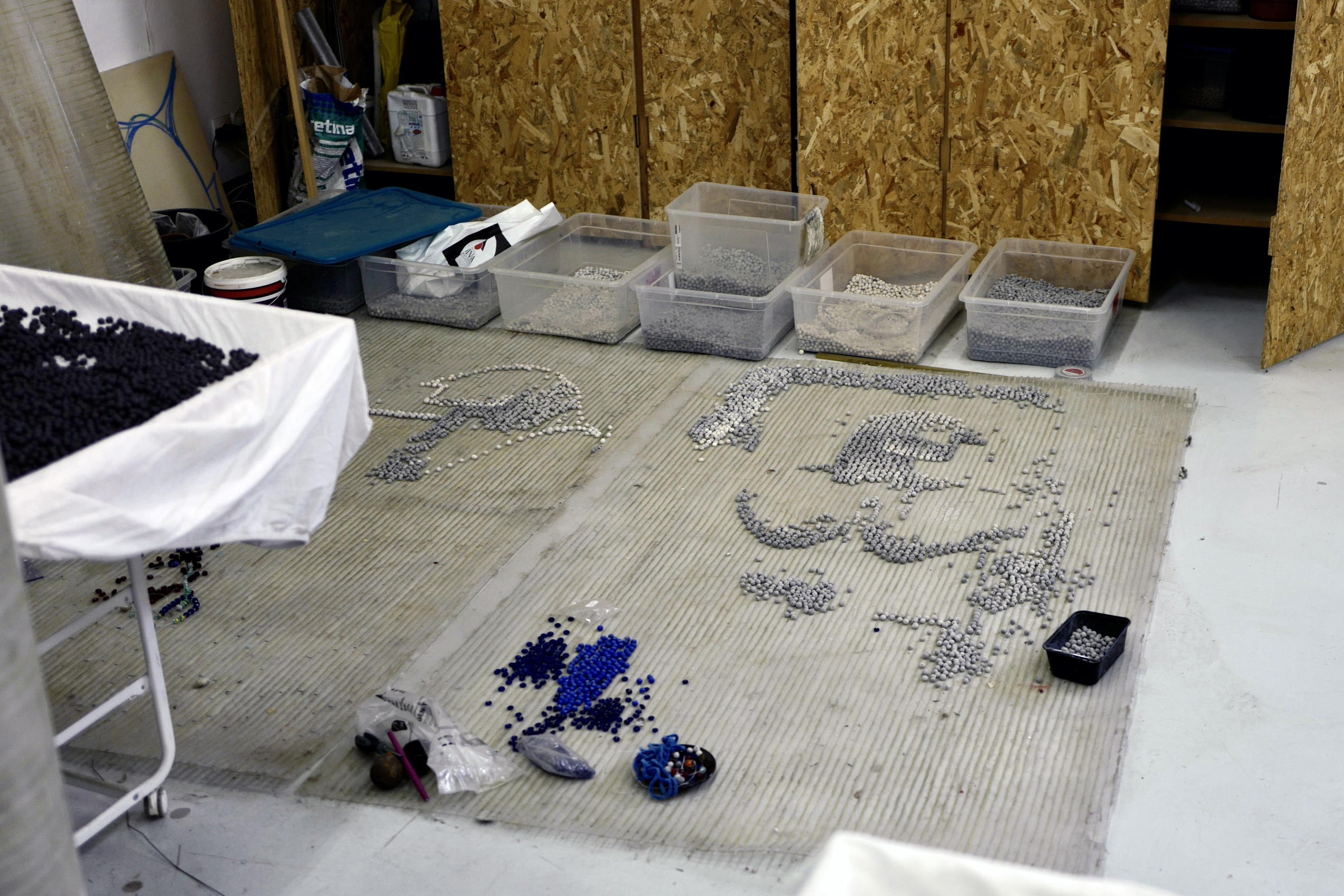
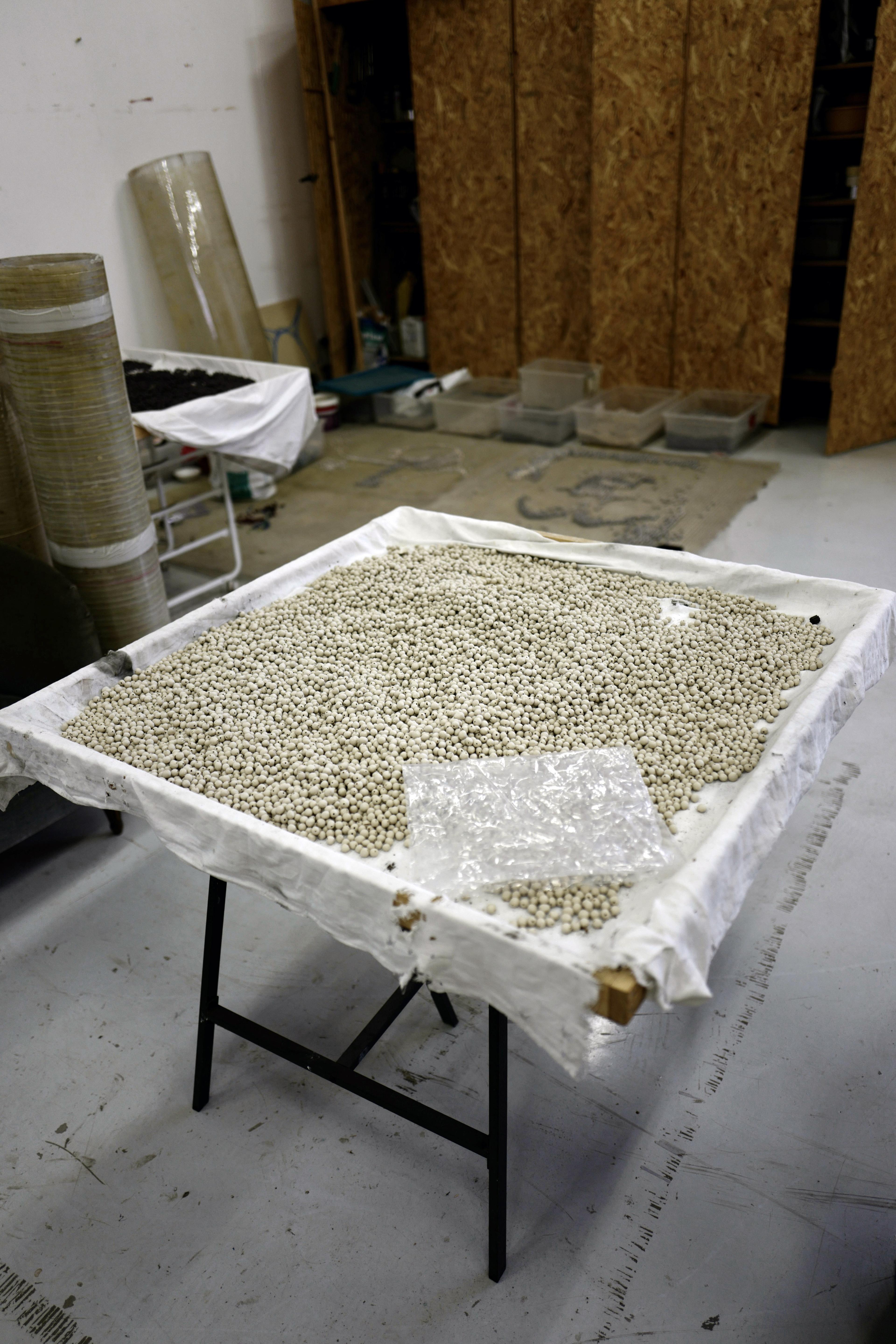
Zoë: Most of the homeschool was art-making. We were taking clay from the cliffs and processing it. That’s how the bead curtains and ceramic things came about. I have photos of my dad and I loading homemade kilns when I was four. It’s been an ongoing practice. It’s less about ceramics and more about taking something from nature and transforming it. It’s a piece of the land.
Sofia: Did you make beads with your mom?
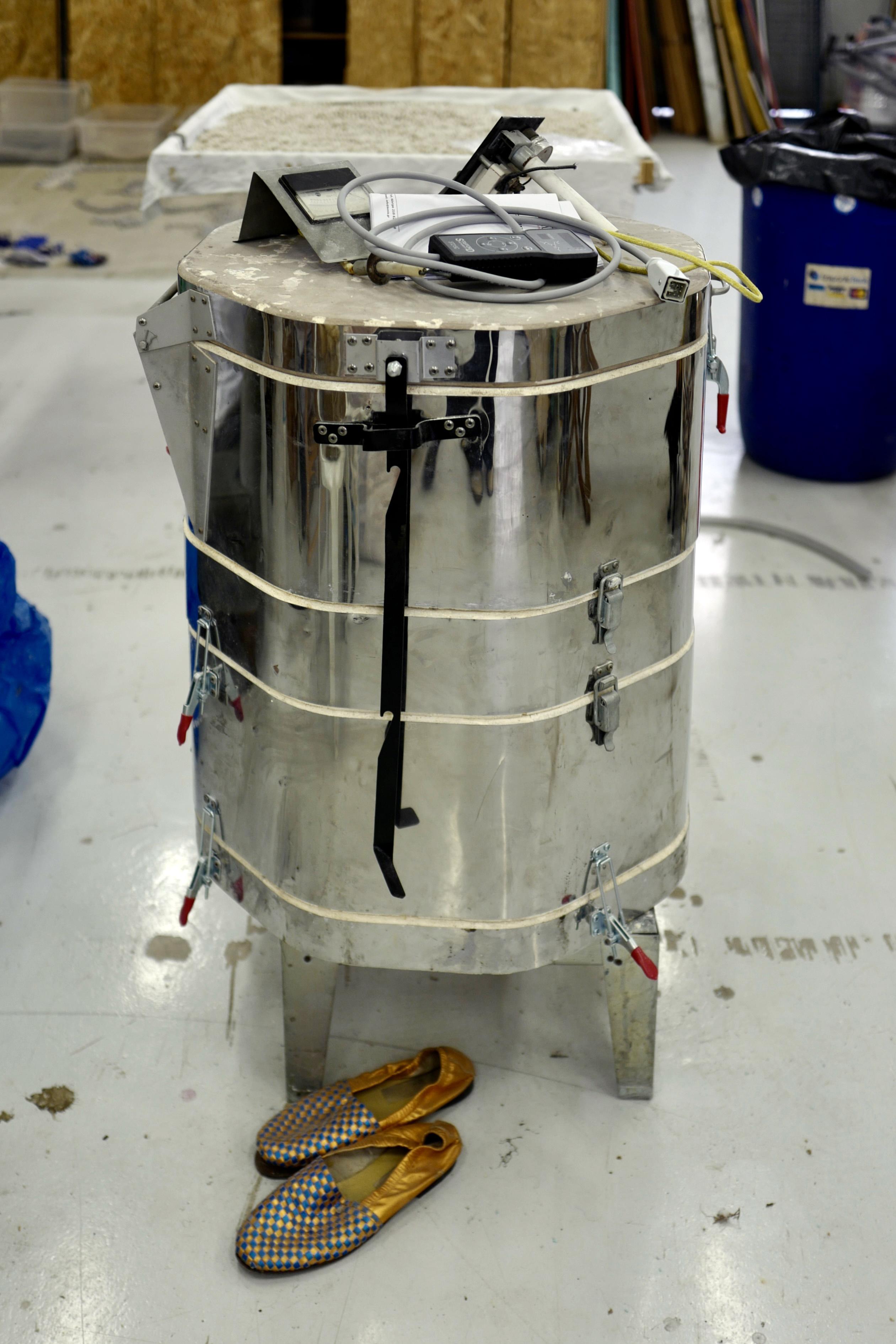
Zoë: Not beads. We made sculptures. We did primitive raku firing in a big metal drum. There’s one down here, but it’s burnt out because after so many firings, the metal dissolves. Now I wrap them in a ceramic fibre blanket to raise the temperature. They get to about 800–900 degrees.
Sofia: And you load the kiln with beads?
Zoë: Yes, beads and sawdust. I make a fire on top, and it burns for 12 to 72 hours. Depends on wind and temperature. It’s a big metal drum with holes punched in the bottom. When you open the kiln, the beads on the top can be very clear white, and they go down to almost black because of the oxygen that comes through. So again, it’s very organic, very primitive. For a long time, I couldn’t compute my practice as ceramics. People asked, “Are you a ceramicist?” I would answer no. It’s an organic process; it is ceramics, but it’s back to the roots. It can be made without high-tech technology. It could have been made thousands of years ago or in the future.
Sofia: It’s funny that you mention algorithms. I actually studied Computer Science in my Undergraduate degree.
Zoë: Really?
Sofia: Yes, and I was recently introduced to the idea of the loom as the originator of the computer. I never thought weaving and programming were similar until recently, but I always saw coding as creative.
Zoë: Yes, zeros and ones. This idea of the underworld and overworld—the void and the reality—bringing it together. Weaving is much more mathematical than drawing. With drawing or sculpture, you work on everything all at once, but with weaving, you have to be precise. There’s a lot of counting; over two, under three. That creates the overall image. It talks about the memory of communities: one line can’t exist without the other. The overall image can’t exist without all the individuals holding their positions. It’s a microcosm of larger communities. And of course, what you see at the front is more polished and the back there is chaos. It ties back to the domestic idea of what’s presented on the outside and what’s actually happening behind the curtain. You never really know the full picture.
Sofia: I’ve also heard you speak about your beads as pixels, but there’s also a thread element that binds them together. When you make your beaded curtains, do you think of them as mosaics or as weavings?
Zoë: I call them ψηφιδωτό—like mosaic. Because they all start as mosaics. So there’s this whole process: making them, firing them, sorting them into different pots. There is a kind of spiritualism or meditation involved in it. The thing I like about the beads and the weavings is that I’m working exactly on a grid. So from that grid, anything can take place. From that constraint, the infinite can take place.
Sofia: I know that for your beaded works, you often work with a group – you have a sort of communal practice.
Zoë: Yes, I prefer doing them with a group. It’s fine to do them individually. You work all day, put a podcast on, and it’s great, and then there’s a little pile of beads. But there’s something nice about the shared energy where you bounce off each other. One person starts rolling, another person starts rolling, and there’s this kind of… “Okay, how many have you made?” You get into a meditative frenzy. And the beads also become a much more collaborative process. They become like a relic of some kind of community activity or energy that we’ve all shared and participated in. I think about them as remnants, a participatory performance.
Sofia: A lot of your beaded curtains have figures inspired by ancient Greek iconography – from Minoan vases to archaeological sites. You also mentioned the beaded curtains an element from the cultural south. But most of your exhibitions have been outside of Greece. I’m wondering how your work has been received abroad; did people perceive these references?
Zoë: I think it’s more of a human condition of a shared consciousness. People are not that dissimilar; we all have to have a belief. What we have left is archaeology, the remnant of the memory of another consciousness. I think of artists as priests, entering a meditative space. That’s why art is important. It’s one of the most basic human things.
Sofia: It’s the concept of art as one of the earliest forms of nonverbal communication. That’s what I was trying to get to with asking you to answer with photographs: it unlocks a different way of communicating that doesn’t rely on language.
Zoë: And in a way, it ties back to coding; it’s a nonverbal language that you’re using to create. I’m really interested in the idea of universal symbols that appear in different cultures, like that of the snake; the snake as a healer. I don’t know whether this is something that cultures communicated, or whether it’s a universal idea; perhaps tapping into some kind of shared consciousness in the human condition. That is actually what my weaving show in Cape Town this year was all about. At the time, I was really interested in mycelium and mushrooms and how they create an interconnected web. The stalk of the mushroom is similar to the omphalos, which reaches out to the universe. In ancient Greece, Delphi was the omphalos, the umbilical cord connecting you to the universe.
Sofia: Is there something that keeps recurring, or is a binding thread within your work?
Zoë: The idea of entropy. Humans need to belong and create culture by attempting to order the disorder of our world, our bodies and our collective systems. I believe nature and the universe are very ordered, but we push against rather than lean into them. We create culture and problems to fix and organise. It’s a Pandora’s box, so to speak. We have concepts of time and, to varying degrees, inherited memories of a collective consciousness which we spend lifetimes trying to understand. The concept of entropy is like the concept of the zero in mathematics or the richness of the void of ‘empty space’. From that place of zero, creation occurs. Creation occurs through the confusion and attempt to order a perception of disorder or chaos. This is why I love temples. Priests and artists are called holy because their place amongst the perceived entropy is to fall into nothingness to arrive at the void.
Sofia: I guess that’s a thread that binds us all together. As you’ve mentioned, your practice includes weaving, ceramics, and painting. How do you make the switch from one medium to the next? Is there something that binds them all together?
Zoë: I’ve never been able to work in one medium. One medium invites the next. I couldn’t understand the colours and forms of the weavings unless I’d done the drawings. So you could say the drawings were in preparation for the weaving, or the weaving in preparation for the drawings, but they had to work together. The idea always comes from the same root, but the question is: what medium best explains it, or how do they start the conversation together? That’s when it becomes interesting.
Sofia: In your upcoming show this summer, you’re planning to have all these mediums exhibited together for the first time.
Zoë: Yes, I’m planning an exhibition at Alkinois with Alix. She is a really old dear friend, so with her, I feel we can do anything. That’s important for me right now because I haven’t shown in Athens since 2020. Often, when you’re working in more commercial galleries, you have to have a thing, your medium. Museums want you for a certain type of work. I love Alix’s space because she just lets you do whatever you want. She works with her friends, and that’s really important. There’s no limitation.
Sofia: I think it would be really interesting to have them all in the same space; having different parts of yourself coming together.
Zoë: Yes, I agree. I actually got stuck on the question you asked me about what is home to me. It’s so scattered. Home is a very conceptual space; I’ve always lived between multiple places, so I have multiple physical homes. A few years ago, I bought an old house on Parnassus Mountain instead of a studio in Athens. This place has opened up so many new pathways. It’s close to Delphi, which is said to be one of the navels of the world. I feel like I am in the middle of everything when I am there. But I need all these different homes to create a whole. For me, home is right in the making space. That’s the only thing that is home for me, but it’s drawn from all these other homes to create the one. It’s all flowing. It’s like mycelia—it’s everywhere. Once you realise there are no borders, we’re just one, we’re all connected. There are different ways of talking about it, and it’s something to be protected, I suppose. Bit by bit, we’re all connected in different ways.
Words and Photography by Sofia Zymnis